Washed Away by Jim Crow: Systemic Racism in "Down By the Riverside"
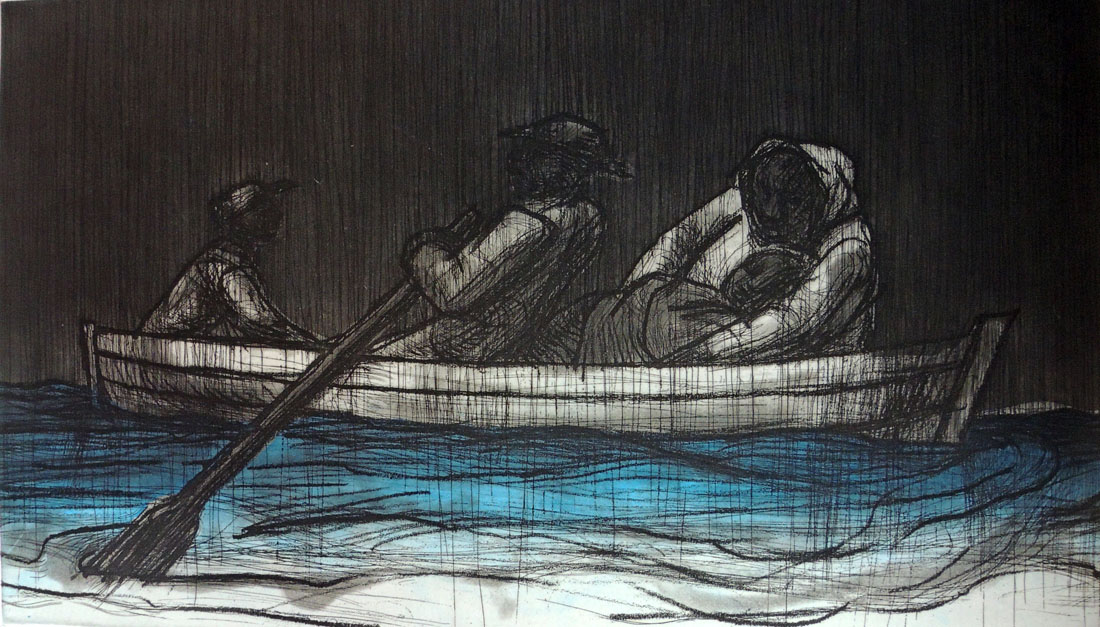
Richard Wright’s “Down By the Riverside,” published about 16 years before the civil rights movement, is a naturalist novel that explores the crushing, inescapable weight of the environmental and systematic racism present in the Jim Crow south. Throughout this short story, Richard Wright primarily voices his opinions through depicting the harsh nature of segregation rather than blatantly calling it out and decrying it. By immersing the reader in the inescapable injustice that Mann faces, Wright is able to create a story that is a testament to why a movement like the civil rights movement is necessary. In this blog, we’ll explore the various scenes and details that Wright includes in order to create this deep, complex story that acts very much like propaganda calling for a movement of change.
The first passage that I want to highlight is the passage when Mann first arrives at the hill. What struck me about this passage was how hostile the white people were to Mann, despite the hill being a place that was supposed to provide peace and rest from the rampant flood. In an environment like this, you would expect that people would be focused on going through the difficult situation as a community, but in the story, it only turned out to be a place where segregation still persisted. Throughout the majority of the story, the hill is depicted as a place of safety, and not much more detail is given by Wright, allowing for the readers to imagine the hill in their own way. However, when the readers finally come to see the segregation, harsh treatment, and racism on the hill, it shows the stark cruelty of the dark Jim Crow South. For example, when Mann first encounters a soldier on the island, the interaction is full of aggression from the white soldier. Even though Mann had just arrived on the island and was still processing all of the traumatic events that he had faced, he was still encountered with harsh shouts from the white soldier: “‘Take off those boots and that raincoat, God-dammit!’” To hear those words in a state of overwhelming emotions shows the harsh reality of the Jim Crow south.
Wright also speaks to the civil rights movement through the levee. As the Britannica quote mentions, the civil rights movement was rooted in the goal to “resist racial oppression and abolish the institution of slavery.” In the story, the levee invokes the legacy of slavery. All black citizens in the town were forced to work on the levee, held at gunpoint and supervised by all of the white town members: coerced labor similar to slavery. The levee’s purpose was to save the town from completely being destroyed. With the levee being very unstable, the white soldiers likely knew that the levee was going to break any moment. However, the desire to prevent the town from being completely destroyed was greater than the desire to prevent more black lives from being put in harm. The white soldiers of the town were actively valuing the property of the town over the lives of black individuals, practically degrading their humanity: a dehumanizing force similar to slavery. Even the manner in which the white people and black people address each other shows the clear imbalance of power across racial lines. On page 81, a black boy constantly refers to the white officer as “Mistah,” and the white officer refers to the black people as “boy.” The language shows that the social legacy of slavery is ever so present, just only presented in a slightly different manner than it had been before.
Finally, I want to point out the scene where Mann is caught as the murderer of Mr. Heartfield and is judged by the white officers. Mann is barely even able to tell his own story and explain himself. Instead, he’s ruthlessly questioned without any time to explain himself. Also, despite all of his heroic efforts to save the Heartfield family, Mann is not seen for his brave acts but rather only seen as a murderer of a white man. This scene shows the crucial flaws of the justice system in the Jim Crow South. White individuals only gathered information about black people that they wanted, and that information very frequently happened to be matters that would deface a black individual. Without a fair trial or investigation, Mann is left helpless in the corrupt justice system of the Jim Crow South. This injustice represented by Wright highlights the change that he’s pushing for.


Hi Daniel,
ReplyDeleteI like the examples you use from the story to show the social embodiment of racism during this era. Seeing how Mann does "nothing" in the story to resist the oppression and what happens as a result makes the case for why something really needs to be done to fight back. Wright's naturalism is able to evoke sympathy for Mann while encouraging readers to take action in an entirely different way. He essentially uses hopelessness as a way of creating hope, which is a unique tactic that you've detailed nicely.
Hi Daniel, I like how you point out that the story is used mainly as propaganda and I think that stories like these helped spark the civil rights movement. I didn't think much about the hill being segregated when I first read the story, but this blog made me realise that the hill has a deeper meaning just like the rest of the story. I think that overall you do a good job uncovering the social layers of the story and how the flood made the black people face more oppression.
ReplyDeleteHey Daniel, something I found very interesting was how you mentioned this story as "propaganda." I've always seen it as a story that was meant to convey a certain message, but I never really thought of it that way. The way that this story is written can be seen as a way that might almost be trying to subconsciously convey something the reader may not notice on the surface.
ReplyDeleteHey Daniel, I also noticed the unfairness that black people have when faced against a white society and I think this blog does a good job shining the light on certain aspects of "Down by the Riverside." It's clear that Mann never had a chance to explain himself, or gain any respect from saving the white family but instead only being called a murderer but the language was also something I never thought of either. As the black boy calls the white man "mistah" it could show how the boy is being polite until the officer calls him "boy" which just feels informal even if it is to a child. Great job highlighting the power imbalances shown in this short story.
ReplyDeleteHi Daniel, I like how you explained the way racism and segregation persisted in a time of crisis. I agree that it does seem strange, but it does make sense that racist people will reveal their true colors when they are in a life threating situation. They only care about their own race, so they will use their racist system to save themselves, such as by having the black people work on the levee. Overall, great post!
ReplyDelete